
"water chemistry"
300 article(s) found

You need to know the technical work of making Espresso coffee. What beans do you use to brew Espresso coffee?
Generally speaking, large coffee beans can produce better coffee. In the case that the quality of coffee beans has been fully assured, the first technical problem to be solved is blending. Blending refers to the selection of coffee beans of different origin and quality to achieve the desired results. The matching technology school believes that 50% of the success factors of a perfect Espresso depend on the composition and quality of the match. no

Boutique coffee common sense what is tannin?
Tannin, one of the main chemical components of coffee beans, accounts for about 7% of the total chemical composition of coffee beans. After extraction, tannic acid will turn into a yellowish powder and easily dissolve in water. Once heated, it will decompose to produce pyrosylic acid, making the taste of coffee worse. Because of this, a cup of brewed coffee will lose its taste and taste if it is not drunk immediately.

What is tannic acid? One of the main chemical constituents of coffee beans
Tannin, one of the main chemical components of coffee beans, accounts for about 7% of the total chemical composition of coffee beans. After extraction, tannic acid will turn into a yellowish powder and easily dissolve in water. Once heated, it will decompose to produce pyrosylic acid, making the taste of coffee worse. Because of this, a cup of brewed coffee will lose its taste and taste if it is not drunk immediately.
Treatment of decaffeinated coffee beans
At present, there are three ways to remove caffeine from coffee beans:
Coffee machine cooking method
< 1 > filter drop method (Paper Drip) 1. First put the prepared filter into the drip, then put the ground coffee powder into (about 2 tablespoons per person, about 12 grams) 2. Pour 95 ℃ of boiled water gently from the center and let the coffee powder and boiling water permeate and spread in a whirling way. at this time, the coffee powder begins to expand and slowly sink, waiting for 25 seconds before preparation.

The Professional Barista's Manual (VIII) Water for Brewing Fine Coffee
Chapter 8 Water Chemistry In the specialty coffee industry, water chemistry does not get the attention it deserves. You may have heard that 98.75% of coffee is water, but few people realize how much water affects the remaining 1.25%. Carbon-filtered water alone may taste good, but Kenya, where you bid for it at a high price, is brewing it with this water.
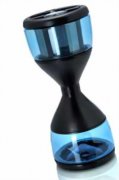
Eastman Tritan polyester powered new coffee machine
Eastman Chemical (Eastman Chemical Company) announced that Hourglass Coffee, based in Portland, Oregon, will use Eastman's Tritan as raw material to produce HourglassCold Brew Coffee systems. Eastman Tritan resin can meet the requirements of tubing toughness, repeated washing durability, heat resistance, chemical resistance and easy processability. Trit

A perfect espresso espresso-Novell coffee how to make espresso? Mouth
Espresso (Espresso) or espresso is a type of coffee with a strong taste by brewing coffee with extremely hot but non-boiling hot water under high pressure and grinding it into a very fine coffee powder. Espresso Ispasu, which means speeding up Mercedes-Benz in Italian. Italian coffee is called the root of good coffee. Although the reputation of Italian coffee belongs to Italy,
What is "extraction"? Four brewing methods of extraction
What is "extract"?
Roasting deduction of coffee beans
The roasting degree of coffee beans determines the style and characteristics of coffee beans, and the roasting degrees of coffee beans in different producing areas are different! According to the taste extracted from the coffee bean producing area and suitable roasting, it can be roughly divided into fruity coffee beans, balanced coffee beans and thick bitter coffee beans. Baking degree shallow and deep [physics]: darker color, fewer folds, less density, larger volume, and stripping.
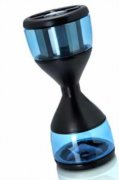
Eastman Tritan polyester powered new coffee machine
Eastman Chemical (Eastman Chemical Company) announced that Hourglass Coffee, based in Portland, Oregon, will use Eastman's Tritan as raw material to produce HourglassCold Brew Coffee systems. Eastman Tritan resin can meet the requirements of tubing toughness, repeated washing durability, heat resistance, chemical resistance and easy processability. Trit

Coffee machine cooking method filter drop method (Paper Drip)
< 1 > filter drop method (Paper Drip) 1. First put the prepared filter into the drip, then put the ground coffee powder into (about 2 tablespoons per person, about 12 grams) 2. Pour 95 ℃ of boiled water gently from the center and let the coffee powder and boiling water permeate and spread in a whirling way. at this time, the coffee powder begins to expand and slowly sink, waiting for 25 seconds before preparation.
English Corner | Why do we bake coffee and raw beans?
Love coffee, is an elegant way of life, love coffee, let's get together! Coffee beans are the seeds of the cherries of the coffee tree. Each cherrytypically contains two beans whose flat sides face each other. When steepedin hot water, raw, or green, coff

If you want to have a good cup of coffee, the water temperature is exquisite.
It is not enough to have good roasted coffee beans to drink a good cup of coffee.

The method of brewing coffee: filter drop method and siphon boiling method
< 1 > filter drop method (Paper Drip) 1. First put the prepared filter into the drip, then put the ground coffee powder into (about 2 tablespoons per person, about 12 grams) 2. Pour 95 ℃ of boiled water gently from the center and let the coffee powder and boiling water permeate and spread in a whirling way. at this time, the coffee powder begins to expand and slowly sink, waiting for 25 seconds before preparation.
Chemical effects in the process of milk foaming
Assuming that all cows grow in the same place and eat the same food, the following three factors have a direct impact on milk: Lactose, milk fat and protein content.

How is decaf made?
At present, there are three ways to remove caffeine from coffee beans: 1. Water treatment can remove 9496% of the caffeine. 2. Chemical extraction method, early use chloroform (Chloroform), benzene (Benzene) as solvent to extract caffeine, later understand that these chemicals cause cancer, and gradually be replaced by other low-hazard chemicals, but after all, the chemical substances are not natural enough, this method can extract 96

How to use the golden cup criterion to judge whether the coffee is too good? Relationship between extraction rate and concentration of Coffee
Coffee extraction rate formula the most standard time calculation range Espresso single part 30ml, double part 60ml extraction amount almost no one will change, except for a few Italy will use a single serving of coffee powder but only extract 15ml coffee liquid American coffee (Americano). To put it simply, it is ESPRESSO to heat water. Generally speaking, one ESPRESSO for small cups and two for medium cups.

What can a Barista learn from a Bartenders?
The highlight of this year's 2017 SCA Expo in Seattle is the American barista contest (US Barista Championship, or USBC). The winner of this year's competition is Kyle Ramage of Mahlkonig USA. He will compete as a representative of the United States at the 2017WBC in COEX, Seoul, in November. Kyle's experience is unique because of his job.

How to control the filling strength of Italian coffee powder press and how to do it
There are also a variety of theories about the strength of coffee powder pressing, 5 pounds, 10 pounds, 20 pounds. Few people know what it is, and there's no need to worry about how many pounds of force it takes, just remember to apply the force evenly so that the pressed powder's tight surface is smooth. If the force is too heavy, it will be very difficult for the water to flow through pressed powder during the extraction.